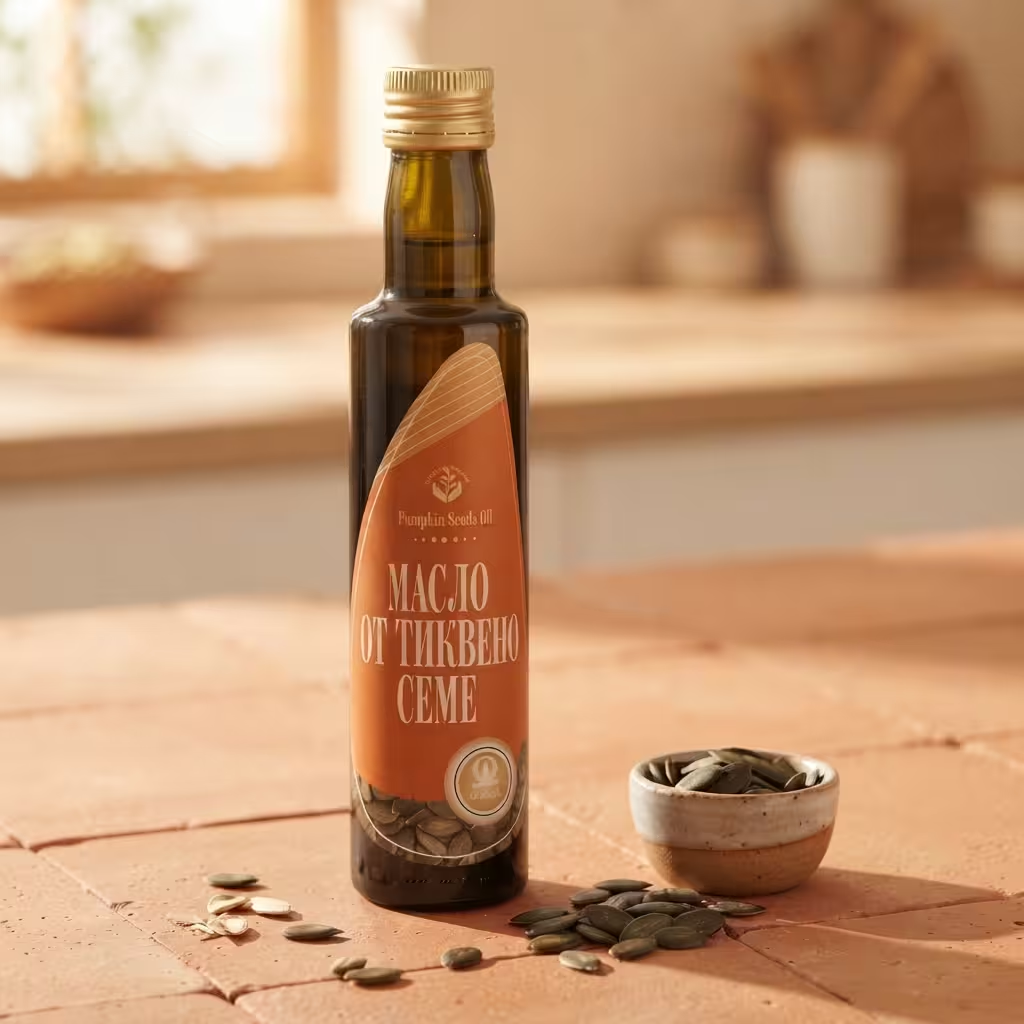
Pumpkin seed oil: the dark green oil from Central Europe
Pumpkin seed oil is the pride of Austrian cuisine. What it contains, which myths about it are not true and why it is even poured over ice cream.
In this article
In southern Austria, pumpkin seed oil is a national symbol. “Styrian pumpkin seed oil” has even been a protected geographical indication in the European Union since 1996. There it goes into potato salad, onto soups and even onto vanilla ice cream. Its dark green colour and rich taste set it apart from all other oils.
What pumpkin seed oil contains
Typical composition per 100 g:
- omega-6 (linoleic acid): about 49 g;
- monounsaturated fatty acids: about 28 g;
- saturated fatty acids: about 18 g.
The dark green colour comes from the natural pigments in pumpkin seeds. In the light the oil looks dark green, and in a thin layer reddish.
The benefit: linoleic acid and normal cholesterol
Linoleic acid contributes to the maintenance of normal blood cholesterol levels. The beneficial effect is obtained with a daily intake of 10 g of linoleic acid.
One tablespoon of pumpkin seed oil (15 ml) contains about 7 g of linoleic acid. The rest of the daily amount comes easily from nuts, seeds and bread.
Two myths about pumpkin seed oil
Pumpkin seed oil is often described as “rich in zinc” and “rich in omega-3”. Neither is true:
- Zinc: zinc and the other minerals stay in the pumpkin seeds and in the flour made from them, not in the oil. The oil contains negligible amounts of minerals.
- Omega-3: pumpkin seed oil contains about half a gram of omega-3 per 100 g. If you are looking for omega-3, choose flaxseed or walnut oil.
Pumpkin seed oil is valued for its taste and its linoleic acid, not for things it doesn’t contain.
Cold-pressed or from roasted seeds?
Austrian oil is traditionally made from roasted seeds and has a pronounced roasted aroma. Cold-pressed oil is pressed from unroasted seeds, below 35°C. It is milder, with a rich nutty taste and a light earthy note.
Taste and use in the kitchen
- soups: a few drops on pumpkin or potato cream soup;
- potatoes: potato salad with onion and vinegar;
- salads: green salad, rocket, roasted pumpkin;
- desserts: a few drops on vanilla ice cream or yoghurt.
From 1 teaspoon to 1 tablespoon is enough for a portion. Cold use only – add it once the dish is on the plate. And mind the tablecloth: pumpkin seed oil stains are hard to remove.
How to store it
- Keep the bottle tightly closed in a cool, dark place.
- Once opened, keep it in the fridge; use it while it is fresh.
Our pumpkin seed oil is cold-pressed below 35°C in a single pressing, with no refining and no additives.
In short
- About 49 g of linoleic acid per 100 g; one tablespoon gives about 7 g.
- Not a source of zinc or omega-3; those stay in the seeds.
- Drops on soups, salads and even ice cream; cold use only.
A varied and balanced diet and a healthy lifestyle are important for good health. The nutritional values in this article are typical values from published data; the exact values for each batch are on the label.
Buy the oil
- Cold-pressed below 35°C
- Free shipping over 50,00€
Related articles
 Oils 3 min read
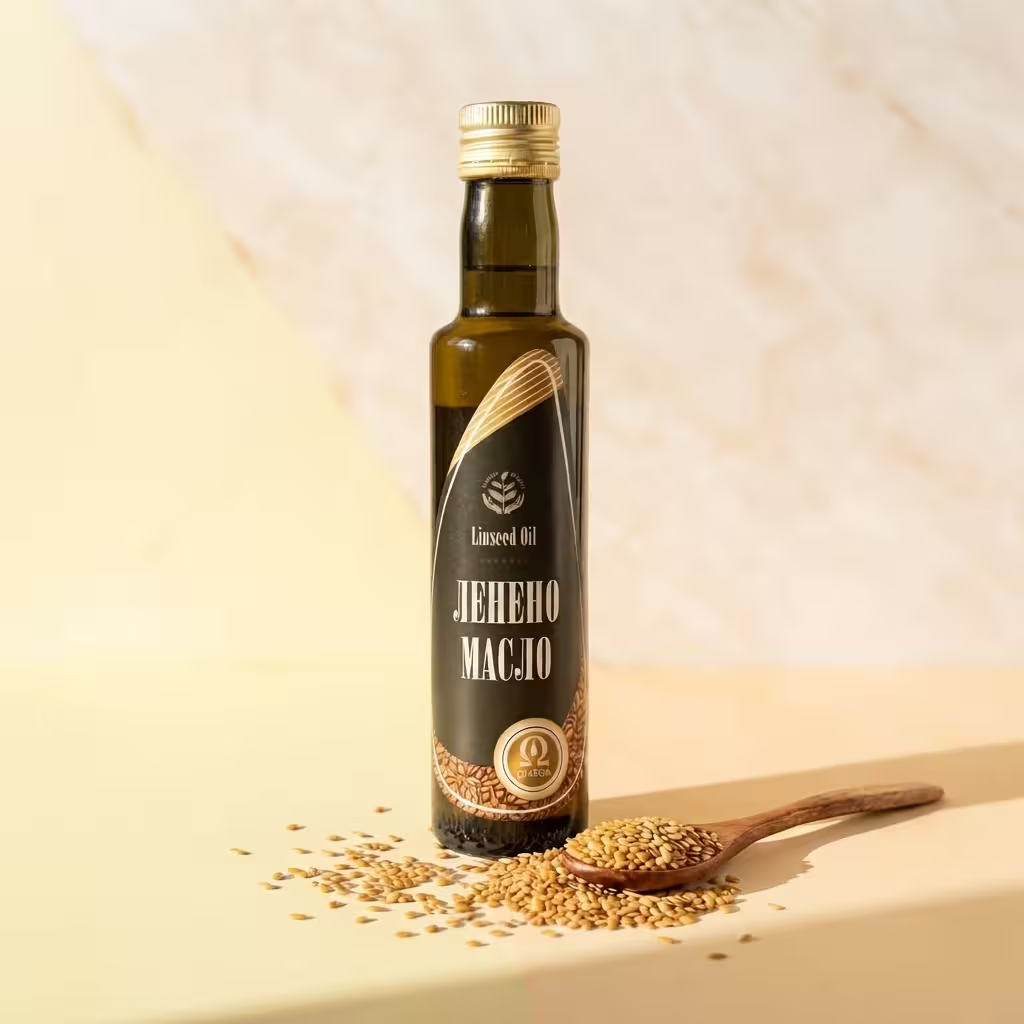
Flaxseed oil: the richest plant source of omega-3 in the kitchen
Why flaxseed oil is so highly valued, how much omega-3 there is in one spoonful, how to use it only cold and how to keep it fresh.
 Oils 2 min read
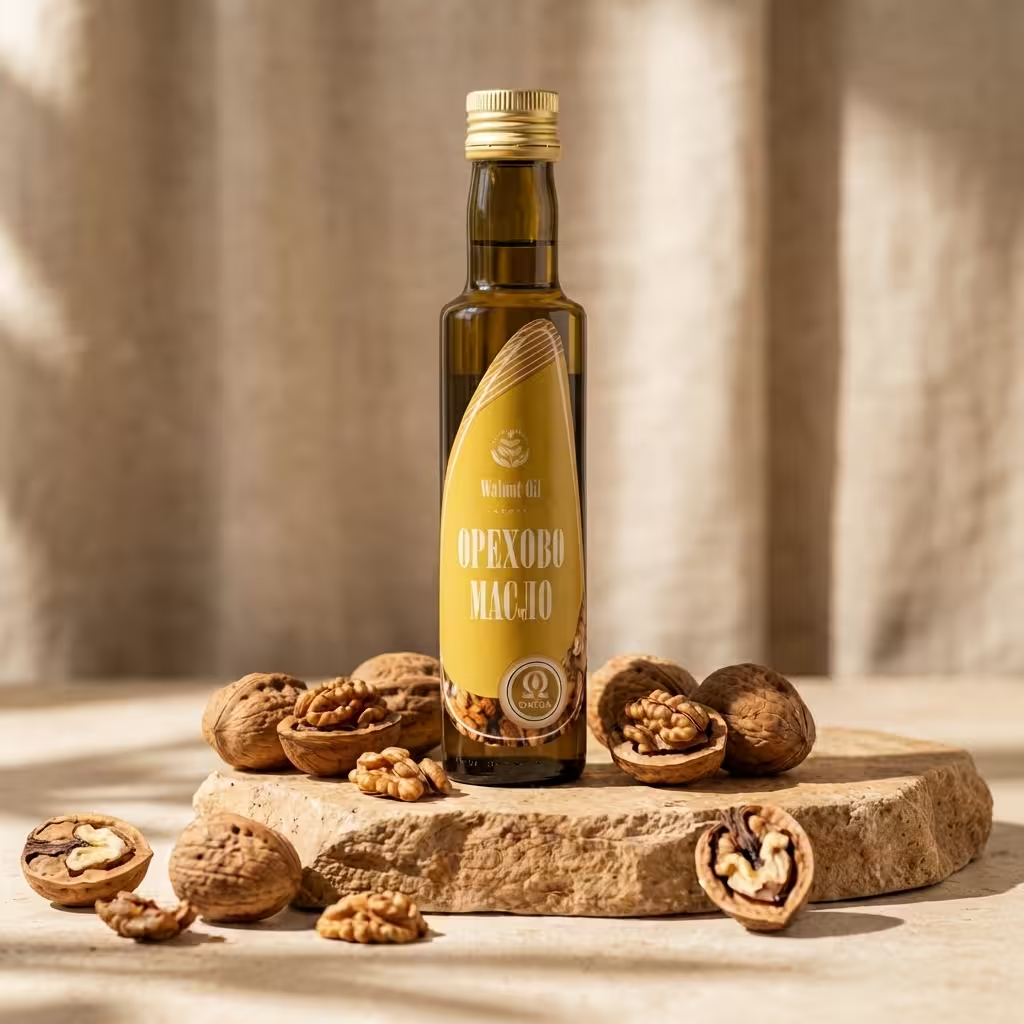
Walnut oil: a delicate flavour and plant omega-3
Walnut oil combines a mild nutty aroma with plant omega-3. See what it contains, how to use it and why it is kept cold only.
 Oils 2 min read
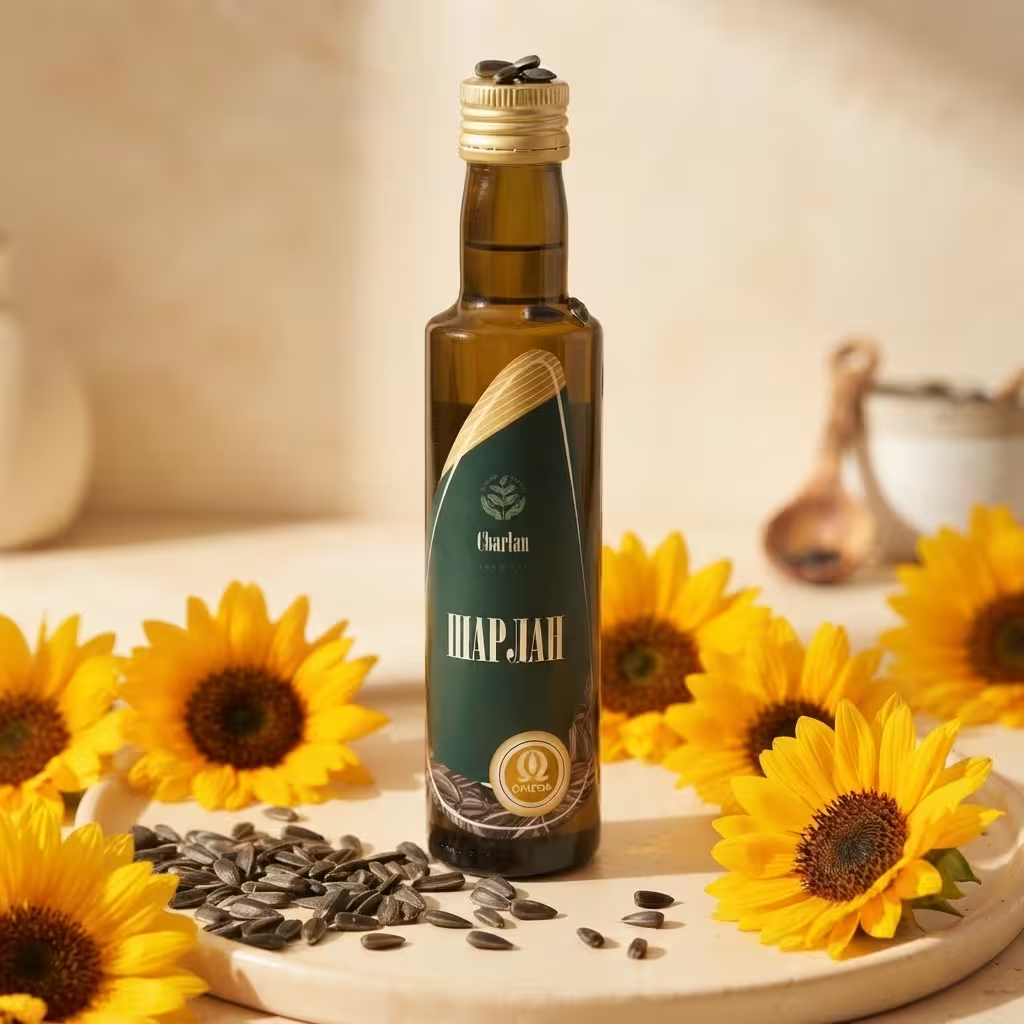
Sharlan: the traditional Bulgarian oil and vitamin E
Where the word “sharlan” comes from, why cold-pressed sunflower oil is high in vitamin E and which dishes it goes best with.
Pumpkin seed oil 6,60€